
In October 2025, Andry Rasamimanana, head of the Ceffel Center in Madagascar, traveled to Morocco to participate in the FAR network’s international seminar on agroecology, followed by three days of technical exchanges on soil fertility with the Fert Maroc team.
A remarkable contribution to the FAR network seminar
The international seminar “Training for Transitions and Agroecology,” held from October 6 to 8, 2025, at the National School of Agriculture in Meknes, Morocco, brought together a wide range of stakeholders from the agricultural, educational, and institutional sectors. This event was part of a dynamic process of reflection and exchange on the challenges of agroecological transition in the Global South.
Invited as a panelist at two roundtables, Andry Rasamimanana highlighted the experience of Ceffel, and more broadly of the Fifata group’s farmer organizations (Fos), in agricultural training and research action.


-
The first roundtable, dedicated to the role of farmer organizations, provided an opportunity to present Ceffel’s pedagogical farming model and its network of 350 lead farmers. This system has yielded tangible results: +20% in yields, -30% in input costs, and a high level of adoption of agroecological practices by farmers trained.
-
The second roundtable, focused on pedagogical approaches, highlighted the integrated training model of the groupe Fifata, which includes the Fekama agricultural vocational schools (three-year initial training and short courses), Cap Malagasy (agricultural advisory service), and training programs for farmer leaders. Agroecology is at the heart of the training programs for young people, with 50% of the time devoted to practical training on the demonstration farms of the Fekama agricultural vocational schools. This approach is bearing fruit: 86% of the young people trained are setting up in agriculture, mainly in agroecological systems.
These initiatives, supported by Fert and its public and private partners, contribute to the success of a new generation of committed farmers and make Ceffel a key actor in the agroecological transition in Madagascar.
In addition to the roundtables, a walking tour allowed participants to discover 17 presentations on agroecology. Field visits were also organized, and Andry Rasamimanana was able to visit an agroecological farm that is a member of the Network of Agroecological Initiatives in Morocco.
Several key points emerged from these discussions to support agroecological transitions, such as the importance of conducting a preliminary assessment and the need to integrate a cultural and social dimension into projects.

Ceffel
Created in 2006 on the initiative of Fifata and Fert to meet the demands of farmers, the specialized farmers organization Ceffel is now recognized as a major actor in the fruit and vegetable sectors and agroecological practices in Madagascar. Its Fruit and Vegetable Experimentation and Training Center, with a 20-hectare farm, serves as an essential support for knowledge transfer and innovation. Its management by the profession and its roots within the Fifata group enable it to respond in a concrete way to the needs of Malagasy farmers.
Fert Maroc
Leveraging the presence of a Madagascan agronomist in Morocco: Meeting with Fert Maroc
After the FAR seminar, Andry Rasamimanana agreed to extend his stay with Fert Maroc until October 11, 2025, to share his experiences on soil fertility. The objectives were, on the one hand, to gain a better understanding of the agronomic contexts in Morocco and observe local agricultural practices, and on the other hand, to discuss fertility management practices and share simple tools for diagnosing soil health.
In the Taza and Tissa regions, Andry Rasamimanana met with Moroccan farmers and technicians, discovering the realities of agriculture in a semi-arid context: calcareous soils, limited water resources, dry climate, etc. The exchanges were based on soil profiles, pH tests, and above all, participatory diagnostics, using shovels and common sense.

This approach generated considerable interest among farmers, who were able to compare their soils and identify areas for improvement themselves, such as adding organic matter and compost or implementing sustainable water management practices.
A final session in Fez, at the headquarters of Fert Maroc, provided an opportunity to share observations and explore ways of adapting the approach to the Moroccan context, particularly with regard to compost, securing organic resources, and moisture conservation techniques.


“Observing, digging, and touching the soil with Moroccan farmers was a memorable experience. Simple field tests encouraged open discussion, sparked curiosity, and gave farmers the confidence to understand their soil. I discovered passionate farmers who were open to dialogue and experimentation. This mission reinforced my conviction that agroecology is built above all on peer-to-peer exchange and the collective application of knowledge.”
Shared lessons and mutual learning
Moroccan farmers showed a genuine desire to test and adapt the practices presented. Ceffel’s experiences inspired new avenues of work for the Fert Maroc team: setting up demonstration plots, participatory monitoring of soil fertility, and strengthening technical exchanges between regions and stakeholders.

“It is often said that water is the most important and vital element in agriculture, but during this mission with the Fert and Fert Morocco teams, Andry and the farmers, we talked about the soil as the driving force and source of life for flora and fauna.
For us, the exchange and sharing of experiences between Madagascar and Morocco was more than just training: it was a source of inspiration and hope, an opportunity for farmers to reconnect with the soil and observe it. In particular, it helped us understand that if our soils are alive, we can continue to live and cultivate.
These exchanges have strengthened our expertise in soil fertility and agroecology. This has awakened a new awareness among our farmers in Taza and Taounate: drought is not our only challenge. Soil health is also crucial. We also rediscovered ancestral agroecological practices that had been forgotten over time but could still be put to good use. Since Andry’s visit, the field advisors have continued their discussions in the field and together they have launched concrete actions, such as composting.“
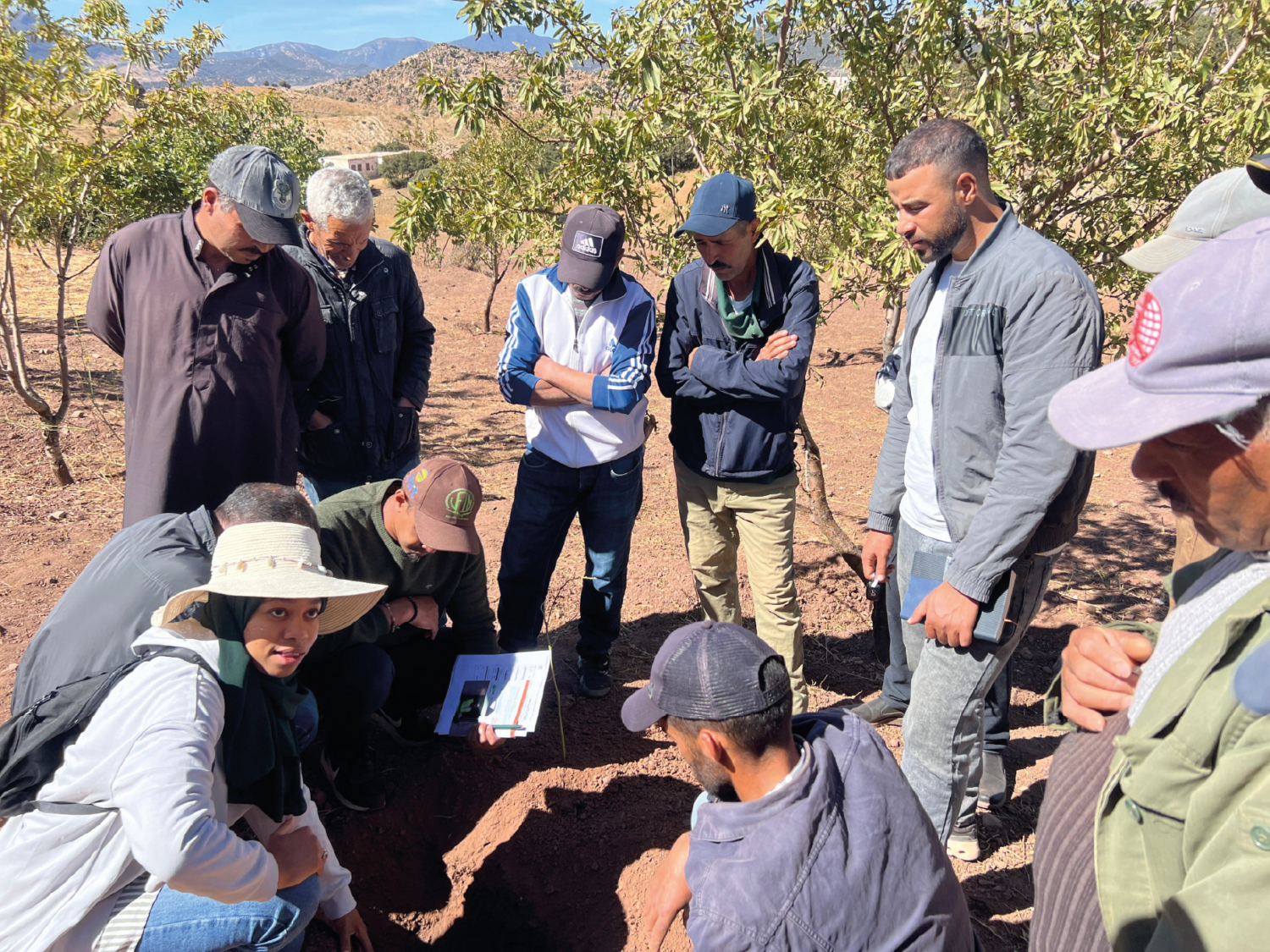
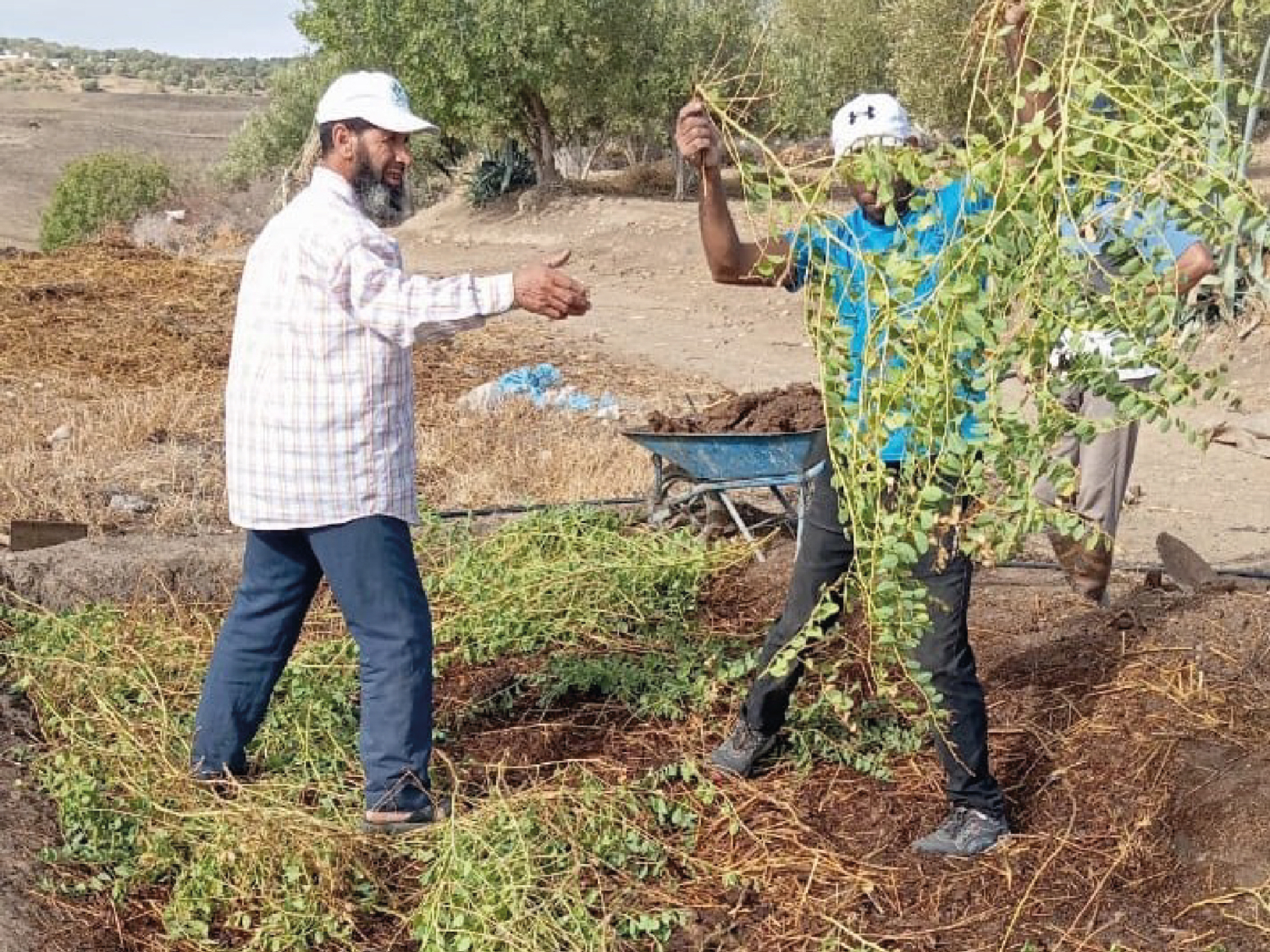
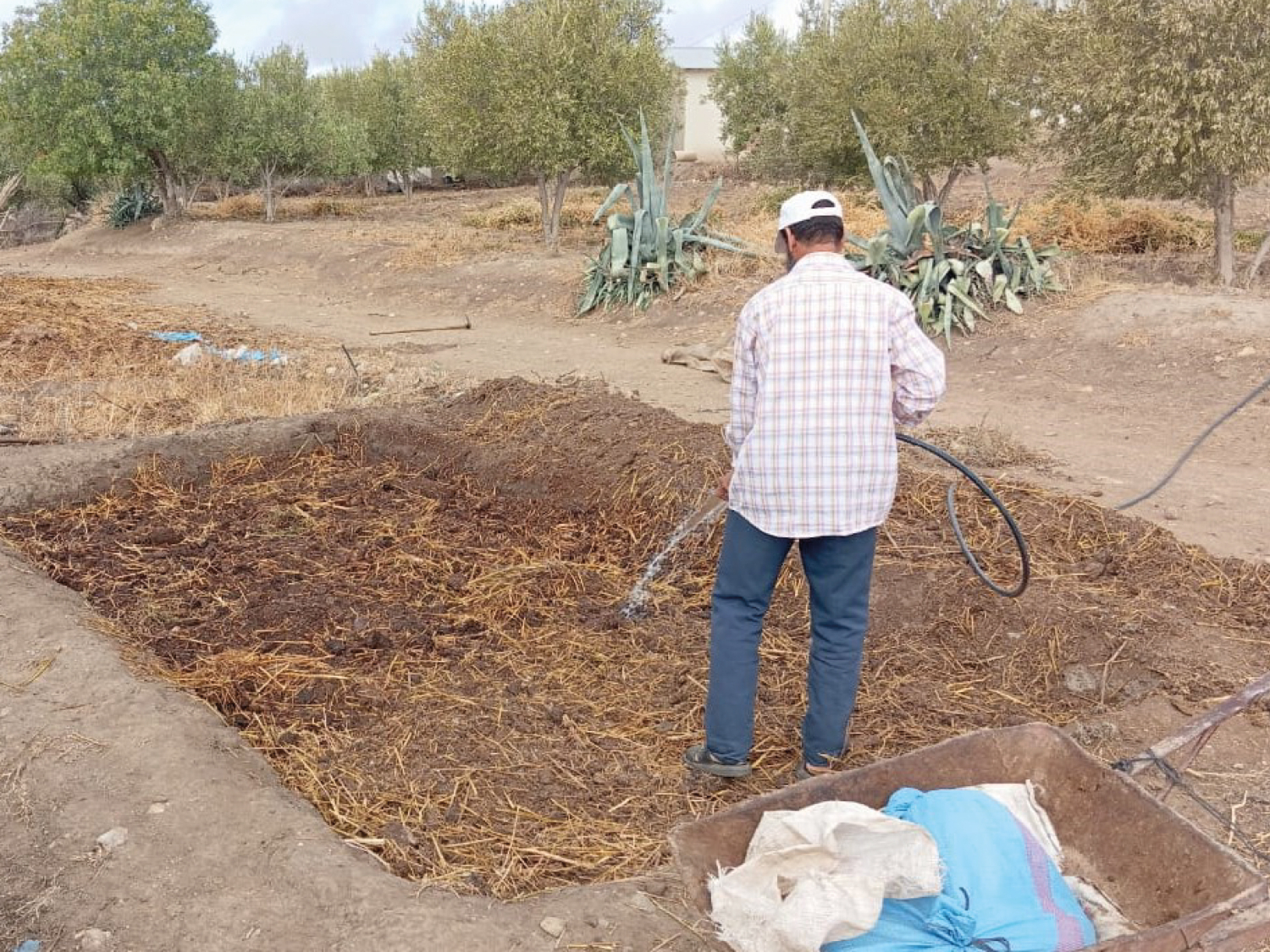

Training, sharing, experimenting: this is what peer-to-peer exchange is all about. Direct observation, discussions in the field, and the practical application of simple tools promote a concrete understanding of fertility issues. These exchanges have brought together organizations that share a common vision: promoting more resilient, sustainable, and soil-friendly agricultural systems. Beyond the technical aspects, this collaboration has also highlighted the power of practical approaches and peer-to-peer exchanges in strengthening local capacities and stimulating innovation: a concrete example of South-South cooperation serving farmers and the agroecological transition.
This mission was made possible thanks to the support of Fert Maroc, the FAR Network, AFD, and AECID/AgriCord.

